Radice quadrata
Calcola √x per qualsiasi numero positivo
Enter any positive number to find its square root. Works with whole numbers, decimals, and large values.
√
Calcola la radice quadrata (racine carrée) di qualsiasi numero istantaneamente con decimali esatti, forma radicale semplificata e soluzioni passo dopo passo. 100% gratuito e senza limiti.
«Racine carrée» è il termine francese per radice quadrata. È uno dei concetti matematici più cercati al mondo da studenti e professionisti.
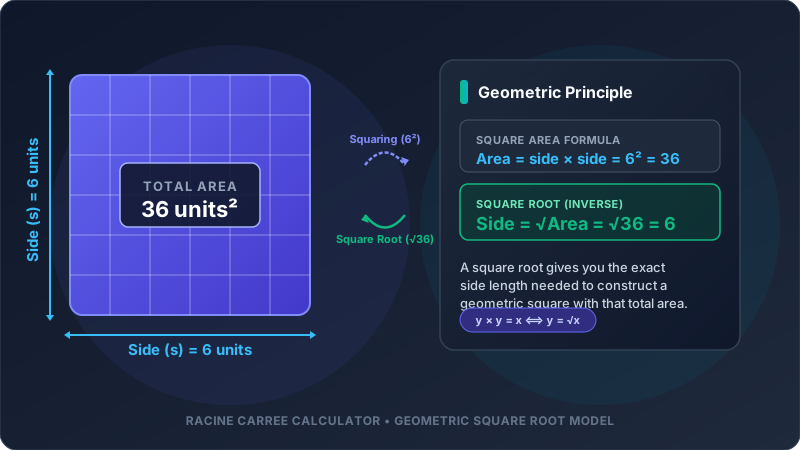
La radice quadrata di un numero è quel valore che, moltiplicato per se stesso, restituisce il numero di partenza. Se moltiplichi 7 per 7 ottieni 49, quindi la radice quadrata di 49 è 7. È l'operazione inversa dell'elevamento al quadrato.
In termini algebrici, la radice quadrata di x è un numero y tale che y × y = x (o y² = x).
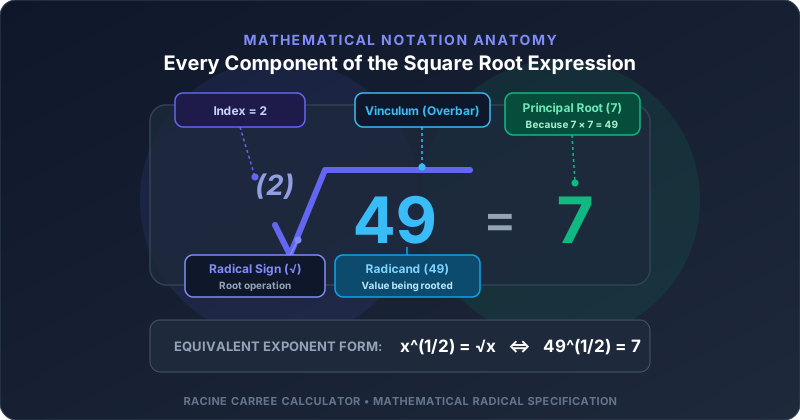
Il segno che indica l'estrazione di radice
Il numero sotto il segno di radice (es. 49 in √49)
Il risultato valutato (es. 7)
Ottieni la soluzione in tre semplici passaggi:
Digita il valore (intero, decimale, frazione o negativo) nella casella superiore.
Premi il pulsante per elaborare istantaneamente il calcolo.
Verranno mostrati il valore decimale, la forma semplificata (es. √72 = 6√2) e i passaggi.
Tutto qui. Non devi memorizzare formule a memoria: lo strumento fa tutto il lavoro per te.
Il simbolo √ è il radicale standard. √36 significa trovare quale numero moltiplicato per se stesso dia 36. Il risultato è 6.
Ogni espressione radicale è composta dal simbolo (√), dal radicando e dalla radice.
È possibile scrivere la radice quadrata anche sotto forma di esponente frazionario:
Entrambe le forme hanno identico significato. I calcolatori utilizzano comunemente x^(1/2).
Non esiste una singola formula chiusa come per l'area di una figura geometrica. La radice quadrata è definita da una relazione inversa:
In parole semplici: qualunque sia la radice ottenuta, moltiplicandola per se stessa si deve riottenere esattamente il numero iniziale.
La radice principale è sempre il valore non negativo. Sia 5 che -5 al quadrato fanno 25, ma per convenzione √25 = 5.
√25 = +5 x² = 25 ⇒ x = ±5 Queste regole permettono di semplificare e manipolare agevolmente i radicali:
Esempio: √(4 × 9) = √4 × √9 = 2 × 3 = 6. Diretto: √36 = 6.
Permette di scomporre una radice in fattori per semplificarla (es. √72 = 6√2).
Esempio: √(16/4) = √16 / √4 = 4 / 2 = 2. Diretto: √4 = 2.
Consente di calcolare la radice di una frazione separando numeratore e denominatore.
Esempio: √(7²) = √49 = 7. Quadrato e radice si annullano.
Elevare al quadrato e poi estrarre la radice restituisce il valore assoluto iniziale.
Esempio: √13 × √13 = 13. √5 × √5 = 5.
Moltiplicare una radice per se stessa elimina il radicale. Utile per razionalizzare i denominatori (1/√5 = √5/5).
Esempio: √(√16) = √4 = 2. E 16^(1/4) = 2.
Estrarre la radice di una radice equivale alla radice quarta.
Puoi calcolare una radice quadrata seguendo quattro approcci distinti:
Inserisci il numero e clicca su Calcola per ottenere risposta e semplificazione istantanea.
Ottimo per numeri interi e quadrati perfetti.
Metodo manuale simile alla divisione per calcolare la radice con precisione decimale arbitraria.
Metodo classico insegnato a scuola per risolvere radici a mano senza calcolatrice.
Per ottenere un valore indicativo rapidamente a mente:
Questo principio è alla base del metodo babilonese (iterazione di Newton-Raphson).
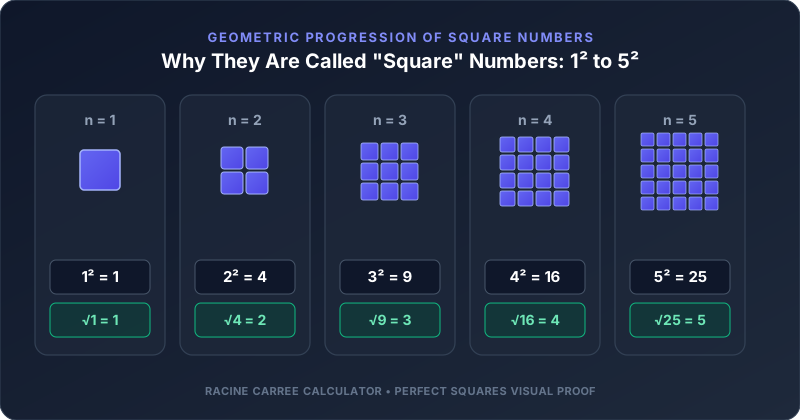
Un quadrato perfetto è un numero intero la cui radice quadrata è a sua volta un numero intero esatto.
| Numero (n) | Quadrato Perfetto (n²) | Radice Quadrata (√n²) | Numero (n) | Quadrato Perfetto (n²) | Radice Quadrata (√n²) |
|---|---|---|---|---|---|
| 1 | 1 | √1 = 1 | 11 | 121 | √121 = 11 |
| 2 | 4 | √4 = 2 | 12 | 144 | √144 = 12 |
| 3 | 9 | √9 = 3 | 13 | 169 | √169 = 13 |
| 4 | 16 | √16 = 4 | 14 | 196 | √196 = 14 |
| 5 | 25 | √25 = 5 | 15 | 225 | √225 = 15 |
| 6 | 36 | √36 = 6 | 16 | 256 | √256 = 16 |
| 7 | 49 | √49 = 7 | 17 | 289 | √289 = 17 |
| 8 | 64 | √64 = 8 | 18 | 324 | √324 = 18 |
| 9 | 81 | √81 = 9 | 19 | 361 | √361 = 19 |
| 10 | 100 | √100 = 10 | 20 | 400 | √400 = 20 |
Conoscere i primi 20 quadrati perfetti velocizza moltissimo i calcoli mentali. Want to test any specific number? Check if any number is a perfect square using our checker →
Quando un numero non è un quadrato perfetto, la sua radice è un numero irrazionale: ha infinite cifre decimali non periodiche.
Questi numeri reali non possono essere scritti come frazione tra interi (come accade per pi greco π).
Il nostro calcolatore fornisce sia la stima decimale ad alta precisione sia la forma radicale esatta.
L'estrazione di radice si applica normalmente a numeri con la virgola e frazioni:
I decimali finiti si valutano agevolmente tenendo conto dei decimali:
Applica la regola del quoziente calcolando numeratore e denominatore:
Inserisci qualsiasi frazione o decimale nella calcolatrice per verificare i tuoi passaggi.
Nei numeri reali, i numeri negativi non ammettono radice quadrata poiché il quadrato di qualsiasi numero reale è sempre positivo.
Per superare questo limite, si definisce l'unità immaginaria i con i² = -1. Vale quindi: √(-a) = √a × i per a > 0.
Questi numeri fanno parte dei numeri complessi (a + bi), essenziali nell'ingegneria elettronica e nella fisica quantistica.
Il nostro calcolatore gestisce automaticamente i valori negativi restituendo il risultato immaginario corretto. Need real roots for negative numbers? Calculate cube roots of negative numbers with real solutions →
Elevare al quadrato ed estrarre la radice quadrata sono operazioni matematiche inverse.
| Operazione | Cosa fa | Esempio |
|---|---|---|
| Elevamento al Quadrato (x²) | Moltiplica un numero per se stesso | 8² = 64 |
| Radice Quadrata (√x) | Trova quale numero moltiplicato per se stesso dia x | √64 = 8 |
Un'operazione annulla l'altra: √(8²) = √64 = 8, e (√64)² = 8² = 64.
Dato che l'elevamento al quadrato elimina i segni negativi, vale la radice principale: √(a²) = |a|.
Tabella rapida da 1 a 50 con radici decimali, forme radicali semplificate e indicazione dei quadrati perfetti.
Ti serve una tabella completa stampabile fino a 100? Prova il nostro Generatore di Tabelle.
| Numero (n) | Decimale (√n) | Radicale Semplificato | Tipo |
|---|---|---|---|
| 1 * | 1.0000 | 1 | Quadrato Perfetto |
| 2 | 1.4142 | √2 | Irrazionale |
| 3 | 1.7321 | √3 | Irrazionale |
| 4 * | 2.0000 | 2 | Quadrato Perfetto |
| 5 | 2.2361 | √5 | Irrazionale |
| 6 | 2.4495 | √6 | Irrazionale |
| 7 | 2.6458 | √7 | Irrazionale |
| 8 | 2.8284 | 2√2 | Irrazionale |
| 9 * | 3.0000 | 3 | Quadrato Perfetto |
| 10 | 3.1623 | √10 | Irrazionale |
| 11 | 3.3166 | √11 | Irrazionale |
| 12 | 3.4641 | 2√3 | Irrazionale |
| 13 | 3.6056 | √13 | Irrazionale |
| 14 | 3.7417 | √14 | Irrazionale |
| 15 | 3.8730 | √15 | Irrazionale |
| 16 * | 4.0000 | 4 | Quadrato Perfetto |
| 17 | 4.1231 | √17 | Irrazionale |
| 18 | 4.2426 | 3√2 | Irrazionale |
| 19 | 4.3589 | √19 | Irrazionale |
| 20 | 4.4721 | 2√5 | Irrazionale |
| 21 | 4.5826 | √21 | Irrazionale |
| 22 | 4.6904 | √22 | Irrazionale |
| 23 | 4.7958 | √23 | Irrazionale |
| 24 | 4.8990 | 2√6 | Irrazionale |
| 25 * | 5.0000 | 5 | Quadrato Perfetto |
| 26 | 5.0990 | √26 | Irrazionale |
| 27 | 5.1962 | 3√3 | Irrazionale |
| 28 | 5.2915 | 2√7 | Irrazionale |
| 29 | 5.3852 | √29 | Irrazionale |
| 30 | 5.4772 | √30 | Irrazionale |
| 31 | 5.5678 | √31 | Irrazionale |
| 32 | 5.6569 | 4√2 | Irrazionale |
| 33 | 5.7446 | √33 | Irrazionale |
| 34 | 5.8310 | √34 | Irrazionale |
| 35 | 5.9161 | √35 | Irrazionale |
| 36 * | 6.0000 | 6 | Quadrato Perfetto |
| 37 | 6.0828 | √37 | Irrazionale |
| 38 | 6.1644 | √38 | Irrazionale |
| 39 | 6.2450 | √39 | Irrazionale |
| 40 | 6.3246 | 2√10 | Irrazionale |
| 41 | 6.4031 | √41 | Irrazionale |
| 42 | 6.4807 | √42 | Irrazionale |
| 43 | 6.5574 | √43 | Irrazionale |
| 44 | 6.6332 | 2√11 | Irrazionale |
| 45 | 6.7082 | 3√5 | Irrazionale |
| 46 | 6.7823 | √46 | Irrazionale |
| 47 | 6.8557 | √47 | Irrazionale |
| 48 | 6.9282 | 4√3 | Irrazionale |
| 49 * | 7.0000 | 7 | Quadrato Perfetto |
| 50 | 7.0711 | 5√2 | Irrazionale |
Semplificare una radice significa estrarre il massimo fattore quadrato perfetto dal radicando:
| Radicale Iniziale | Forma Semplificata | Scomposizione & Metodo | Test |
|---|---|---|---|
| √8 | √(4 × 2) → 2√2 | 8 = 4 × 2, √4 = 2 | |
| √12 | √(4 × 3) → 2√3 | 12 = 4 × 3, √4 = 2 | |
| √18 | √(9 × 2) → 3√2 | 18 = 9 × 2, √9 = 3 | |
| √20 | √(4 × 5) → 2√5 | 20 = 4 × 5, √4 = 2 | |
| √32 | √(16 × 2) → 4√2 | 32 = 16 × 2, √16 = 4 | |
| √45 | √(9 × 5) → 3√5 | 45 = 9 × 5, √9 = 3 | |
| √50 | √(25 × 2) → 5√2 | 50 = 25 × 2, √25 = 5 | |
| √72 | √(36 × 2) → 6√2 | 72 = 36 × 2, √36 = 6 | |
| √75 | √(25 × 3) → 5√3 | 75 = 25 × 3, √25 = 5 | |
| √98 | √(49 × 2) → 7√2 | 98 = 49 × 2, √49 = 7 | |
| √200 | √(100 × 2) → 10√2 | 200 = 100 × 2, √100 = 10 |
La regola del prodotto consente di portare fuori radice i fattori quadrati perfetti.
Le radici quadrate trovano impiego quotidiano nella scienza e nella tecnologia:
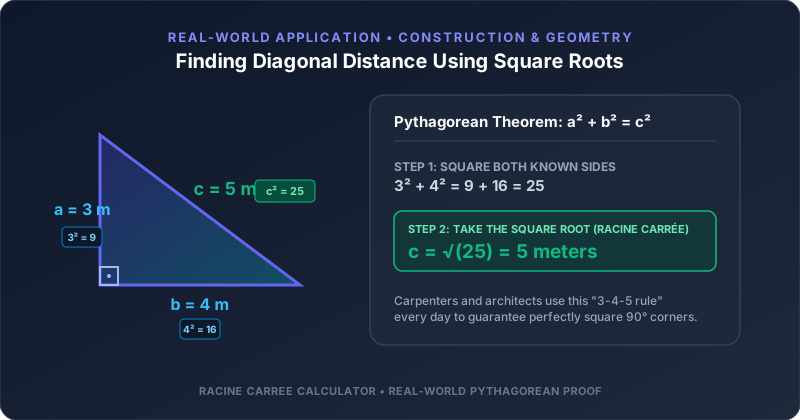
Il teorema di Pitagora (a² + b² = c²) usa le radici per calcolare diagonali e pendenze (es. √(3² + 4²) = 5 m).
La deviazione standard, misura fondamentale della volatilità e del rischio finanziario, è la radice quadrata della varianza.
Velocità in caduta libera (v = √(2gh)), oscillazioni di pendoli e calcoli di circuiti elettrici.
Distanza euclidea nei videogiochi, rilevamento collisioni e complessità di algoritmi √n.
Ricavare il lato di una stanza partendo dai metri quadri: un locale di 64 m² ha lati di √64 = 8 m.
Digita il numero nella casella e clicca su Calcola. Otterrai subito il valore decimale, la forma semplificata (es. √72 = 6√2) e la scomposizione passo a passo.
«Racine carrée» è il termine francese per «radice quadrata», cioè il valore che moltiplicato per se stesso dà il numero dato.
Sì. Restituisce il valore con l'unità immaginaria i (es. √(-16) = 4i) accompagnato dai passaggi risolutivi.
La radice quadrata moltiplica per se stessa 2 volte (indice 2). La cubica moltiplica 3 volte (indice 3) e ammette soluzioni reali negative.
Tramite scomposizione in fattori primi, divisione manuale a colonne o stima babilonese.
Un numero intero la cui radice quadrata è un numero intero esatto (es. 1, 4, 9, 16, 25, 36, 49, 64, 81, 100).
No. Solo i quadrati perfetti danno radici razionali. Tutti gli altri generano numeri irrazionali con decimali infiniti.
Sì, è 100% gratuita, accessibile da qualsiasi browser senza limiti né registrazione.
Sì, puoi digitare numeri decimali o frazioni per risolverli istantaneamente.
È per convenzione internazionale la soluzione non negativa della radice quadrata.

La radice quadrata risponde a una semplice domanda: quale numero moltiplicato per se stesso dà questo valore? Usa la nostra calcolatrice per risposte rapide ed esatte.